

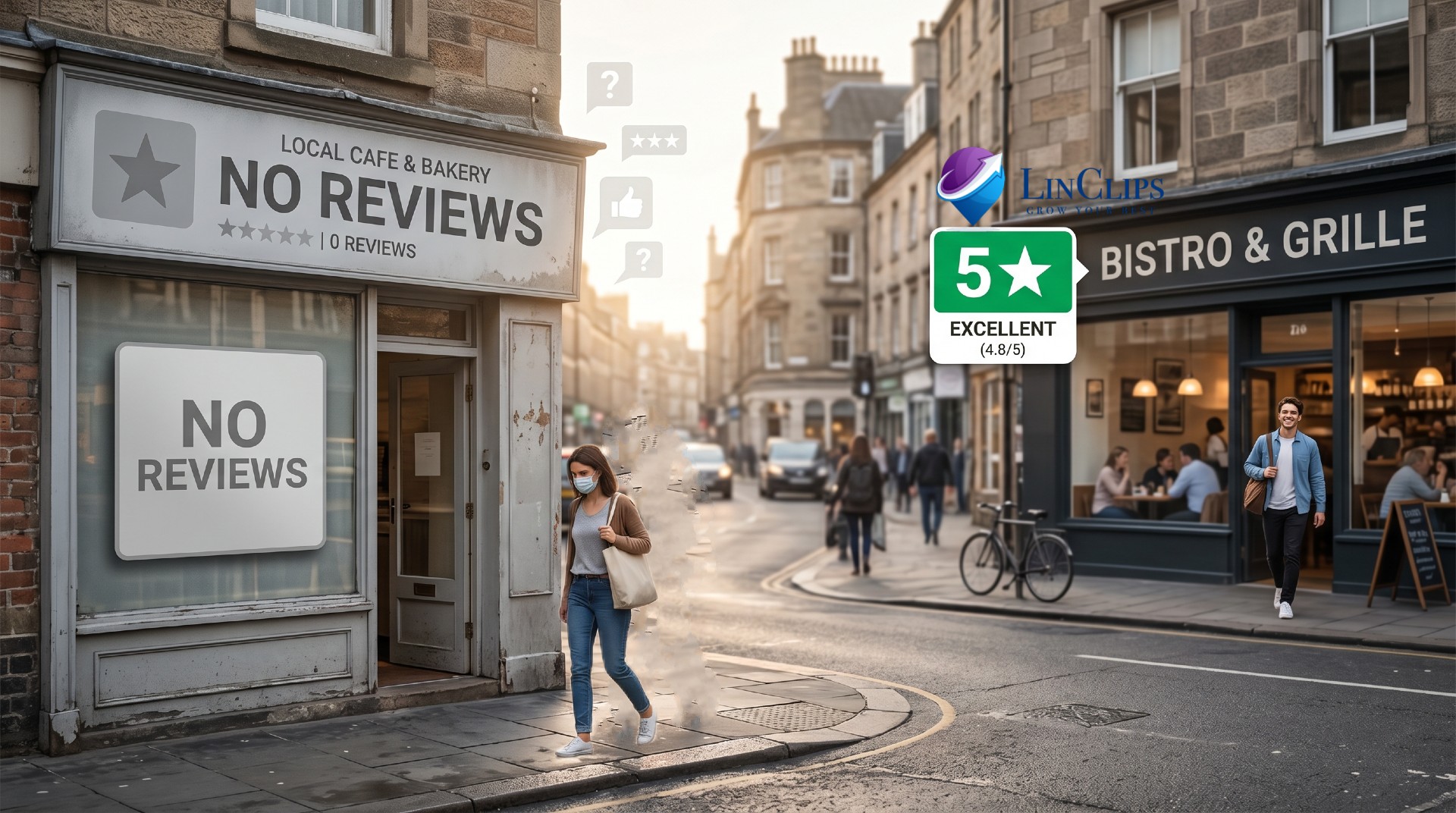
When someone searches for a restaurant, plumber, or dentist nearby, what’s the first thing they look at? Not your website design or your years in business. They check your reviews. If they find nothing, they move on to the next option. This simple reality explains why local businesses without online reviews struggle to attract customers, even when they offer excellent service.
The digital landscape has changed how people make buying decisions. Social proof has become the currency of trust, and reviews serve as that proof. Without them, businesses become invisible to potential customers who rely on peer feedback before spending money. Let’s explore why missing reviews cost local businesses customers every single day and what this means for your bottom line.
How Online Reviews Shape Customer Trust
Modern consumers rely on peer validation before making purchase decisions. Research shows that 93% of people read reviews before choosing a local business. This behavior reflects a fundamental shift in how trust gets built in the marketplace.
Reviews serve as digital word-of-mouth, replacing traditional referrals in the digital age. When your neighbor recommends a great coffee shop, you trust that recommendation. Online reviews work the same way, except the recommendations come from dozens or hundreds of previous customers. Each review adds another layer of credibility to your business.
Businesses without visible customer feedback appear less credible compared to competitors with active review profiles. When potential customers compare two similar businesses and one has 50 reviews while the other has zero, the choice becomes obvious. The absence of reviews doesn’t register as neutral. It raises questions about why no one has shared their experience.
The Visibility Gap: How Missing Reviews Hurt Local Search Rankings
Search engines prioritize businesses with fresh, authentic reviews in local pack results. When someone searches for services near them, Google displays a map with three featured businesses. These spots go to businesses that demonstrate active engagement through customer reviews.
Google’s algorithm considers review quantity, quality, and recency as ranking factors. The search engine wants to show users the most relevant, trustworthy options. Reviews provide concrete signals about which businesses people actually choose and recommend. Without this data, search engines have no reason to feature your business prominently.
Without reviews, businesses become invisible in map searches where 76% of local searches result in store visits within 24 hours. Think about what this means. Three out of four people who search for local services visit a business the same day. If your business doesn’t appear in those search results because you lack reviews, you miss out on ready-to-buy customers every single day.
The Direct Connection Between Review Volume and Map Pack Position
Businesses with 40+ reviews rank significantly higher in local search results. This threshold represents a tipping point where search algorithms recognize your business as established and trusted. Getting to 40 reviews should be an early priority for any local business serious about visibility.
Consistent review activity signals business relevance to search algorithms. A steady stream of new reviews tells search engines that your business actively serves customers. Stagnant review profiles suggest a business that might be closed or declining in popularity.
Review velocity, meaning the rate of new reviews, influences ranking momentum. Businesses that gain reviews consistently over time build stronger search positions than those with old reviews that stopped coming years ago. Fresh reviews demonstrate ongoing customer satisfaction and business activity.
What Happens When Potential Customers See Zero Reviews?
No reviews create immediate doubt about business legitimacy and quality. When people browse search results and see a business without any reviews, their first thought isn’t positive curiosity. They wonder what’s wrong. Is this business new? Are they bad at what they do? Do they have something to hide?
Customers instinctively choose competitors with verified social proof. Given two options, people naturally gravitate toward the choice that others have validated. This instinct runs deep in human psychology. We look to others for guidance on what’s safe, valuable, and worth our time.
The absence of reviews suggests either newness or poor customer satisfaction. Neither interpretation helps your business. New businesses face an uphill battle building trust. Established businesses without reviews face an even steeper challenge because people assume the worst about why feedback doesn’t exist.
The Psychology Behind Review-Driven Purchase Decisions
Social proof triggers the bandwagon effect, making reviewed businesses more attractive. When we see others choosing something, we feel more comfortable making the same choice. This psychological principle explains why popular restaurants stay popular and unknown ones struggle to fill tables.
Star ratings provide instant quality assessment that influences split-second decisions. People scan search results quickly, making snap judgments based on visual cues. A 4.5-star rating communicates quality instantly. Zero stars or no rating creates friction in the decision process.
Negative space, meaning no reviews, creates anxiety rather than neutrality in consumer minds. The human brain doesn’t interpret missing information as neutral. We fill gaps with speculation, usually negative speculation when money and risk are involved. A blank review section makes people nervous about choosing your business.
Revenue Impact: Quantifying the Cost of Missing Reviews
Businesses with reviews earn 31% more revenue on average than those without. This statistic represents real money left on the table. If your business generates $200,000 annually, missing reviews could mean losing $62,000 in potential revenue. That’s not a small impact.
A one-star increase in rating can lead to 5-9% revenue growth. The difference between a 3.5-star and 4.5-star rating translates directly into more customers choosing your business. Star ratings function as a competitive advantage that compounds over time.
Local businesses without reviews lose an estimated 70% of potential customers to competitors. Seven out of ten people who might have become your customers choose someone else because you lack social proof. This customer leakage happens silently, without you knowing about the lost opportunities.
How Customer Expectations Have Changed in the Review Economy
Today’s consumers expect transparent feedback and real experiences from past customers. The internet has trained people to research before buying. Checking reviews has become as automatic as checking prices. Businesses that don’t meet this expectation get filtered out early in the decision process.
The review-checking habit has become automatic before visiting or calling local businesses. People don’t consciously decide to check reviews anymore. It’s part of the natural flow of finding and choosing local services. Your potential customers check reviews even if you don’t think about reviews.
Younger demographics especially distrust businesses without digital social proof. Millennials and Gen Z grew up with online reviews as a standard part of commerce. For these customers, a business without reviews seems suspicious or outdated. As these demographics gain more purchasing power, the importance of reviews only increases.
Why Silence Speaks Louder Than Words Online
Empty review sections raise red flags about business practices. People wonder why no customers have shared feedback. Do you discourage reviews? Are you hiding something? Have you failed to satisfy customers enough that they’d recommend you? These questions pop up instantly when people see zero reviews.
Customers assume businesses without reviews either discourage feedback or lack satisfied clients. Both assumptions hurt your reputation. The first suggests you’re afraid of transparency. The second suggests you don’t deliver quality worth talking about.
The void creates speculation rather than neutral perception. Your potential customers fill the information gap with assumptions. Unfortunately, those assumptions rarely work in your favor. People imagine worst-case scenarios when data is missing.
Common Reasons Local Businesses Fail to Collect Reviews
Many business owners feel uncomfortable asking customers for reviews. This discomfort stems from not wanting to seem pushy or self-promotional. However, satisfied customers usually feel happy to help businesses they appreciate. The ask rarely bothers people who had positive experiences.
Lack of systematic review request processes leads to missed opportunities. Without a system, review collection depends on remembering to ask each time. In busy operations, this memory-based approach fails. Thousands of satisfied customers leave without ever being asked to share their experience.
Technical barriers and unfamiliarity with review platforms prevent consistent collection. Some business owners don’t know how to share review links or which platforms matter most. Others find the process confusing and give up after initial attempts.
Businesses underestimate the impact reviews have on their bottom line. When you’re focused on daily operations, reviews seem like a nice-to-have rather than a business necessity. This misunderstanding costs businesses significant revenue and growth opportunities.
The Competitive Disadvantage in Local Market Share
Competitors with strong review profiles dominate local search visibility. These businesses capture attention first because search engines feature them prominently. They get called first because people trust them immediately. This advantage compounds month after month.
Review-rich businesses capture disproportionate market share in their service areas. The gap between businesses with reviews and those without keeps widening. Early movers who built review profiles years ago now enjoy massive advantages that seem hard to overcome.
Without reviews, businesses compete with one hand tied behind their backs. You might offer better service, lower prices, or more expertise than competitors. None of that matters if potential customers never consider you because you lack social proof.
How Review Gaps Create Opportunity Losses Daily
Every day without reviews represents lost conversions from search traffic. People search for your services today. They see your competitors’ reviews and choose them instead. Tomorrow, the same thing happens. These daily losses add up to significant annual revenue gaps.
Mobile users making immediate decisions skip businesses lacking social proof. Someone searching on their phone while standing on the street needs to make a quick choice. They pick the option with visible validation. Without reviews, you don’t make the shortlist.
The compounding effect means early review collection pays exponential dividends. Reviews attract more customers. More customers create opportunities for more reviews. This positive cycle builds momentum. Starting later means missing years of this compounding benefit.
Breaking the Silence: Steps to Start Building Your Review Foundation
Identify your happiest customers and reach out personally with review requests. Think about clients who have thanked you, referred others, or repeatedly chosen your business. These people already appreciate what you do. They just need a simple request and an easy way to share feedback.
Implement systematic follow-up processes after positive service interactions. Create a routine where every satisfied customer receives a review request within 24-48 hours. This timing captures feedback when the positive experience is fresh in their mind.
Make leaving reviews easy by providing direct links to your preferred platforms. Don’t make customers search for where to leave reviews. Send them a clickable link that takes them directly to your review page. Removing friction increases follow-through significantly.
Create a review collection strategy that becomes part of your customer journey. Build review requests into your standard operating procedures. Train staff to mention reviews. Add prompts to receipts or follow-up emails. Make review collection as routine as taking payment.
Automating Review Requests to Build Momentum
Automated campaign systems ensure no satisfied customer slips through the cracks. Technology can send review requests automatically after transactions or service completion. This consistency eliminates the human error of forgetting to ask.
Timing matters when requesting reviews. Send requests when customer satisfaction peaks, typically right after successful service delivery. Someone who just had a great experience feels motivated to share. Wait too long, and the motivation fades.
Personalized automation combines efficiency with authentic relationship building. Automated messages can still include customer names, specific service details, and genuine appreciation. Technology handles the scheduling while maintaining the personal touch that encourages responses.
Transforming Review Collection into Business Growth
Consistent review accumulation creates a flywheel effect for visibility and trust. Each new review makes your business more visible in search results. Higher visibility brings more customers. More customers mean more review opportunities. This cycle accelerates growth.
Managing and showcasing reviews amplifies their impact across marketing channels. Don’t let reviews sit only on Google or Facebook. Feature them on your website, in email signatures, and in advertising. Reviews work harder when you put them to work across all customer touchpoints.
Review-driven businesses experience faster growth and stronger market positioning. Companies that prioritize social proof gain advantages in customer acquisition costs, conversion rates, and customer lifetime value. Reviews become a strategic asset that keeps giving returns year after year.
Frequently Asked Questions
How many reviews does a local business need to compete effectively?
Aim for at least 40 reviews to cross the threshold where search engines recognize your business as established. However, competition varies by industry and location. Check what your top competitors have and target matching or exceeding their review count. Most importantly, focus on consistent growth rather than hitting a number once and stopping.
What percentage of customers actually leave reviews without being asked?
Only about 5-10% of customers leave reviews voluntarily without prompting. This means you miss 90-95% of potential reviews if you don’t ask. Systematic review requests can increase this rate to 20-30%, dramatically improving your review collection results.
Do negative reviews hurt as much as no reviews help?
Negative reviews have less impact than you might fear. Businesses with some negative reviews often perform better than those with zero reviews. People expect to see occasional negative feedback. Perfect ratings can seem fake. A few negative reviews among many positive ones actually boost credibility. The key is responding professionally to negative feedback.
How long does it take to build a credible review profile from scratch?
With focused effort, you can build a respectable review profile in 3-6 months. If you serve 50 customers monthly and convert 20% to reviews, you’ll gain 10 reviews per month. In six months, that’s 60 reviews, which creates a solid foundation. Consistency matters more than speed.
Can businesses recover from having zero online reviews?
Absolutely. Starting from zero is challenging but completely doable. Many successful businesses started with no reviews and built strong profiles. The key is starting now rather than waiting. Each week you delay means lost opportunities. Begin with your most satisfied customers and build momentum from there.
Why do customers trust online reviews from strangers?
People trust reviews from strangers because they seem unbiased. Strangers have no reason to lie about their experience. Multiple reviews from different people create a reliable pattern. This crowdsourced information feels more trustworthy than marketing messages from the business itself. Customers also see themselves in reviewers and relate to their experiences.
What’s the biggest mistake local businesses make with review collection?
The biggest mistake is not asking for reviews at all. Business owners assume customers will leave reviews if they want to, but most satisfied customers need a prompt and an easy process. The second biggest mistake is asking only once. Successful review collection requires systematic, ongoing efforts, not one-time campaigns. Consistency beats intensity when building review profiles.
Leave a Reply